Loudon Inducted as Heritage Builder in Row Ontario’s Hall of Fame
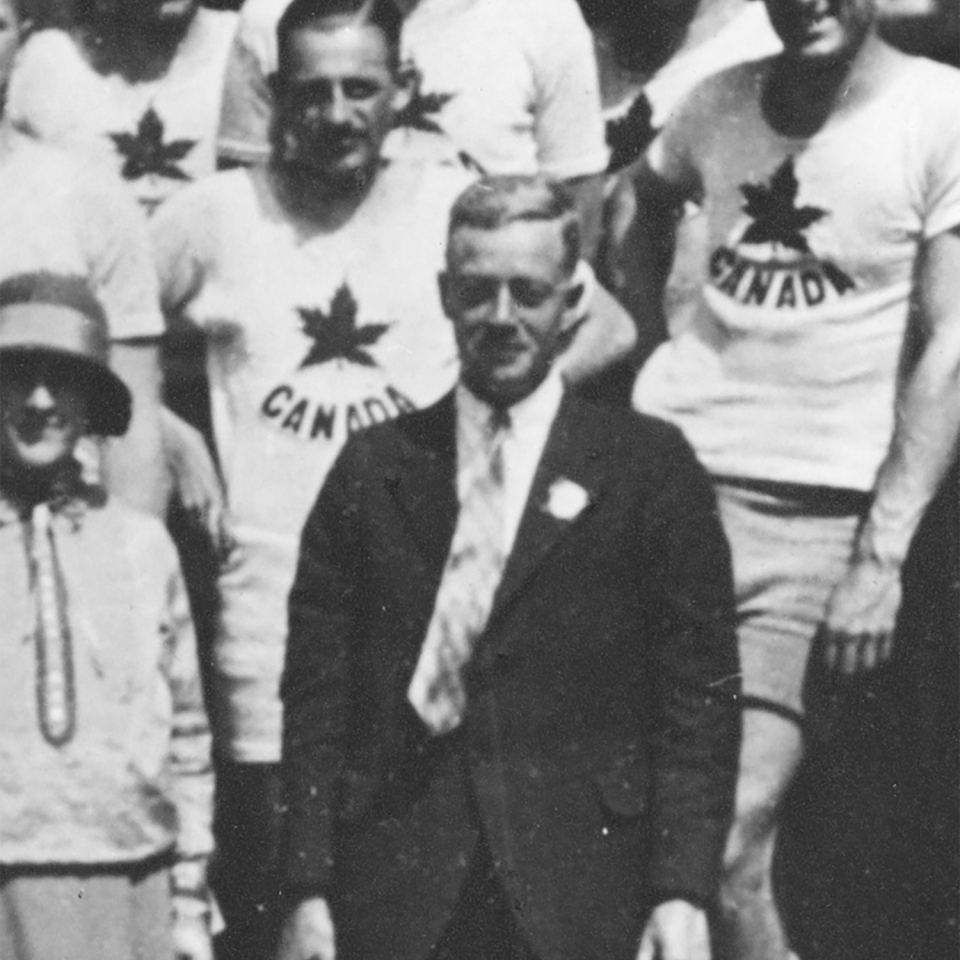
Thomas R. Loudon’s accomplishments in rowing were honoured on Tuesday with an induction into the Row Ontario Hall of Fame. Loudon goes into the Hall as a heritage inductee in the builder’s category, the first ever heritage builder to be inducted.
Although he’s most well known in rowing circles as a builder and a coach, Loudon’s first success in rowing came as a coxswain with the Argonaut Rowing Club. The highlight of his competitive career came in 1904, when he coxed the Argo’s eight to a silver medal at the Olympics in St. Louis. Following the Olympics Loudon attended the University of the Toronto where he got his first administrative positions in sports, becoming President of the schools boxing program and manager of the intermediate football team. He would graduate from U of T in 1909 with a degree in civil engineering but would stay on campus as a professor.
During his teaching career, Loudon would stay close to sports, most prominently rowing. In 1920, he was instrumental in creating the Varsity rowing program at U of T, which included securing a boathouse on the busy Toronto waterfront. Once the program was established, he became head coach, a position he would hold until 1936. Under Loudon’s leadership, the program would experience instant success, winning the senior eight at the Royal Canadian Henley Regatta 1920-1923. The U of T eight qualified for the 1924 Olympics in Paris, and with Loudon as the coach earned the silver medal. He was also a coach at the 1928 Olympics in Amsterdam, which saw two Canadian boats win medals, as the Argonaut eight would claim the bronze and the double (Jack Guest and Joe Wright Jr.) would win the silver. The Varsity Blues won eight intercollegiate championships during his time as head coach.
In addition to, or maybe because of, coaching, Loudon became an innovative thinker in Canadian rowing. He designed and built the eight used by the 1924 Olympic crew, a boat that was shorter and wider than British-built boats, made to better handle rowing on the open water of Lake Ontario. A decade observing rowers from the coxswain’s seat, plus his methodical engineering training, made Loudon more attuned to training methods and in his memoirs wrote about finding the right mix of effort levels, as well as recovery from training, to ensure optimal preparation for racing.
During this time, Loudon would also begin to make his mark at the executive level. He became a board member of the Canadian Association of Amateur Oarsmen (now RCA) in 1919 and would stay on the board until 1949, serving as President from 1925-27. His leadership and influence in Canadian sport extended beyond rowing as his other roles include President of the University of Toronto Athletic Directorate 1944-1954, President of the Canadian Intercollegiate Athletic Union 1952-54, Board Member Amateur Athletic Union of Canada 1925-1932 (President 1928-30). He also put his civil engineering degree to good use as he designed and supervised the construction of the east stand at Varsity Stadium in 1924, and Varsity Arena in 1926 Varsity Arena was the first such building to have spectator sightlines unobstructed by columns. The building still stands and has been used by many Varsity Blues athletes, including the rowing team which has used the building for erg training.
Row Ontario will be announcing the inductions of the 2023 Hall of Fame class throughout the week as part of ‘Hall of Fame Week’. Previously announced members of the 2023 Row Ontario Hall of Fame induction class are Nancy Storrs (Coach/Builder) and Lynda Dundas (Builder). Stay tuned the rest of this week for more announcements on the 2023 induction class of the Row Ontario Hall of Fame.