The Power of Accessibility in Sport – Para Rowing
By Ellen Rowe – RowOn Diversity & Inclusion Committee
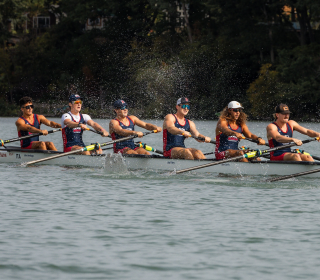
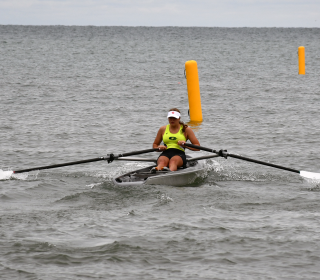
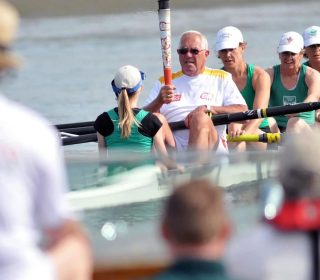
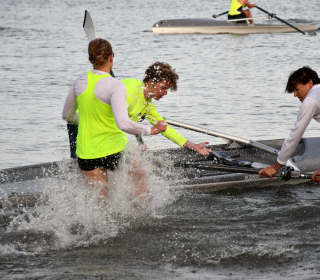
Rowing is for anyone and everyone. Athletes – no matter their ability or expertise – can come together based on their common passion for the sport. Whether you are using the rowing machine (what I will refer to as an erg) or are out on the water, you are not defined by your (dis)ability, rather everyone is a rower.
About Para Rowing
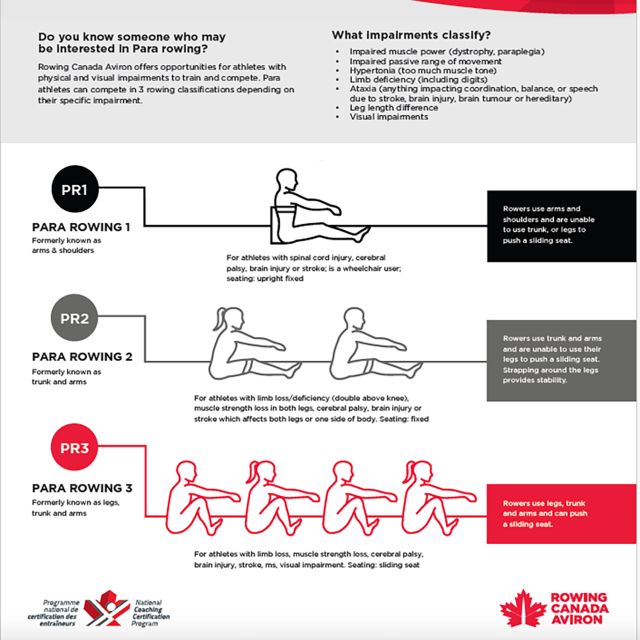
By definition ‘Para-rowing is sweep rowing or sculling for people with physical disabilities / limitations, including in part, hearing impairment, paraplegia, quadriplegia, blindness, visual impairment, multiple sclerosis, cerebral palsy, and spina bifida.’ Whether athletes compete at a local regatta or head to the Paralympics, there are three rowing classifications depending on a person’s impairment – PR1, PR2, and PR3.
There are currently 11 para rowing programs across the province.
The Power of Accessibility:
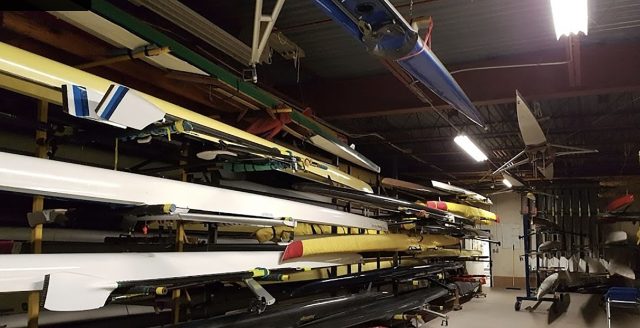
Think back to the very first time you entered a rowing club’s boat bay. Boats line the racks above, on your left and right side, some covered and strapped down while others are still wet from practice. I smile each time I think back to my first tour of the Kingston Rowing Club (KRC) boat bay.
However, if I were looking to try rowing and it was my first time visiting a club in my neighbourhood in my wheelchair, I may not be able to see the boat bay or the training room due to inaccessibility. I would deal with obstacles such as physical objects in my way, stairs, and small doorways. Without the same enticing and eye-opening experience, I would surely lose interest in rowing, prior to even getting out on the water.
My Top 4 Insights:
In an attempt to get back out on the water myself, I began reaching out to local clubs in search of para rowing programs. When my search came up empty, I began researching what is required to start a para rowing program. The following are a few of my top insights:
1. Connect with clubs and coaches.
In preparation for this article, I began connecting and talking with rowing clubs across the country. I never imagined just how valuable connecting with other clubs would be when determining the feasibility, infrastructure and equipment requirements for para rowing programs.
My focus then shifted towards the coaches and volunteers who would ultimately be working with the athletes. I reached out to Head Coach, Norma Strachan from the Ottawa New Edinburgh Club (ONEC) to learn more about what it takes to coach and organize rowing programs. With over 20 years’ experience, I appreciated all of her insight.
In our conversation, Norma told me about her visit to the Argonaut Rowing Club in Toronto. Last winter, she attended the para rowing dry land programing and, in the spring, she had the chance to row with the athletes on Lake Ontario. The Argo’s para rowing program consisted of 4 participants with a wide range of disabilities. My number one takeaway from our conversation is the importance of providing para rowers with a strong support system and equal opportunity year-round.
I made sure to also reach out and connect with Rebecca Orr, Coach at the Argo’s. After learning how the program was first developed and the ways in which each challenge that arose was dealt with, I was pleasantly surprised with an invite to meet the para rowing athletes. I cannot wait to meet everyone, see the club’s facilities, and get out on the water!
2. Be curious and ask questions.
Ask members to start looking closer at the club’s level of accessibility before going out for a row or coming to the boat house for a training session. You may be surprised what someone notices that perhaps you had previously missed.
Ask members of your community that use mobility devices to navigate your club and help you determine the feasibility of establishing an adaptive rowing program. Do not assume they need help. Most people will ask and let you know how you can be of help when needed.
Be curious, ask for suggestions and insight as to how other spaces or clubs may have already adapted to better suit their needs. What many people do not realize is that everyone’s needs may differ, even if the athletes use the same mobility devices.
3. Get creative. Something is better than nothing.
Let us assume the docks are out, the ice is forming on your water, and winter training is about to begin but your club is closed for accessibility renovations. What can you do for your athletes in the meantime?
Perhaps your club can partner with a local and accessible community athletic group.
This past winter, due to city construction, the Ottawa Rowing Club (ORC) got creative and brought their ergs to a local gym, called Underground Strength and Conditioning (USC), for dry land training. I spoke with one of the co-owners Daniel to ask why USC chose to support and work with the local rowing club. He answered by saying, “Fitness should be all inclusive and accessible for all. We had a blast hosting ORC at USC last winter! Whether you are looking to train for a specific sport or get active, movement is good for everyone.”
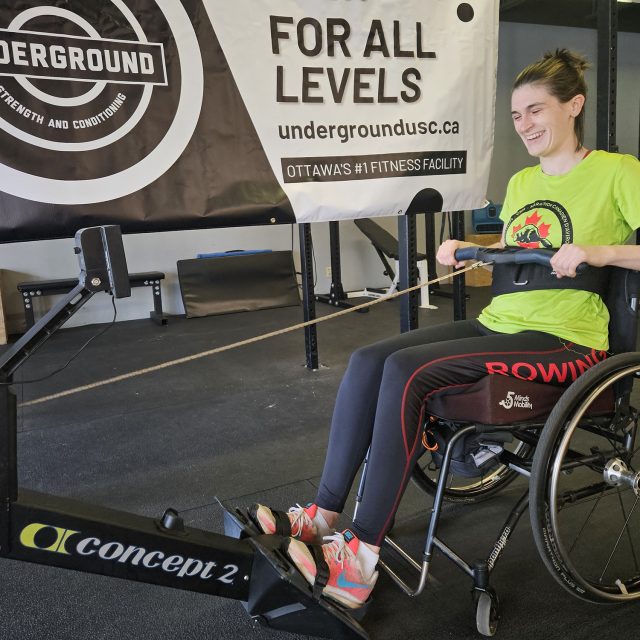
This photo is of me at USC – working on my split in hopes of accomplishing my goal of rowing on the water this summer in Ottawa. This was even before I had started talking to anyone about establishing an Ottawa para rowing program.
I was only able to get back into training because this gym was wheelchair accessible, and the coaches were willing to adapt the workouts and equipment to my needs. I felt welcomed back into the fitness world and was extremely grateful someone was willing to get creative!
4. Gauge interest by offering ‘try it’ events
Once you are ready to host a para rowing program, you will want to determine how many members of the community are interested and how many volunteers and staff will be required to support those athletes.
By hosting a ‘Try It’ event, athletes have an opportunity to try para rowing without the commitment. If there is an overwhelming interest, you will be better prepared to address the needs of your athletes.
Next Steps
Creating an accessible environment is paramount to providing everyone, no matter their ability or disability, with an opportunity to row.
Clubs looking for more insight in creating new programs and increasing accessibility and inclusion efforts can contact the RowOn Diversity & Inclusion Committee at jirianna@rowontario.ca
Diversity & Inclusion Committee Members
Caitlin Beresford – Chair
Jordan Rendall
Claire Hutchinson
Katie Bruggeling
Kubet Weston
Chantal Batt
Ellen Rowe
Cayley Firth
Aditya Raman
Maureen Fair